When many people think about using Botox for face slimming, their first reaction is: Can one simply get Botox injected into the chewing muscles if they have a large face?
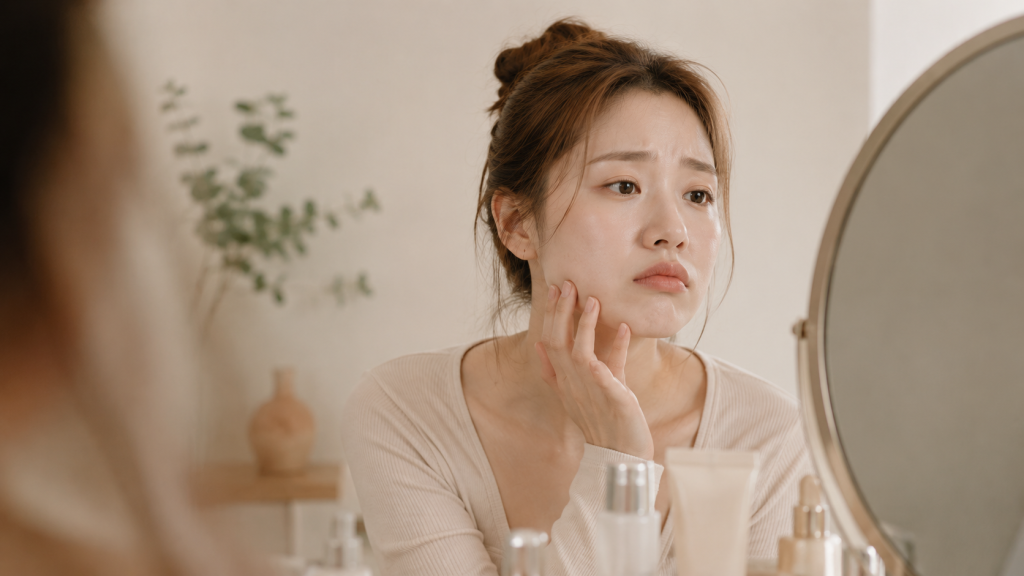
Do people with larger faces necessarily suit Botox for their chewing muscles?
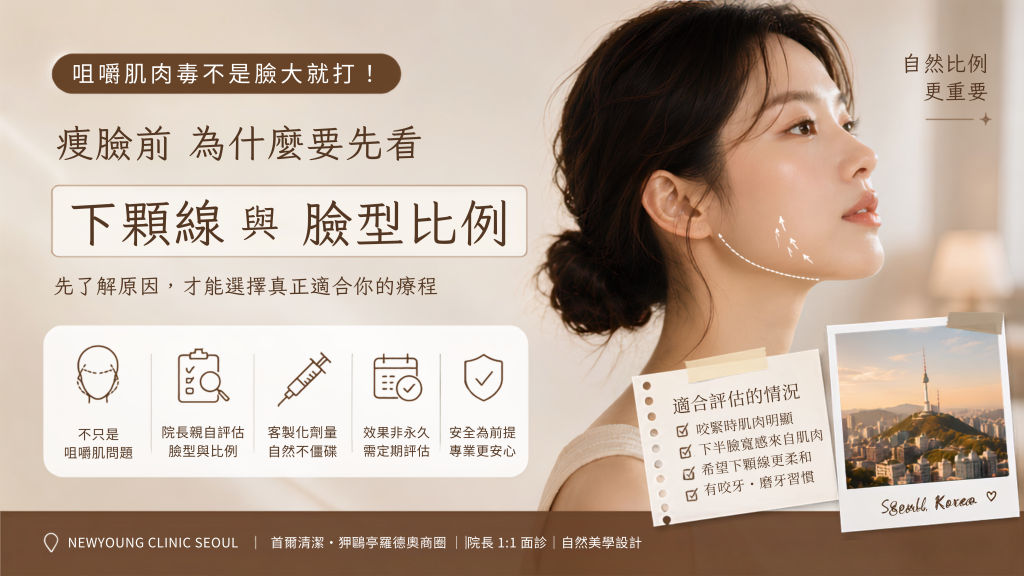
Especially when planning to go to South Korea for cosmetic procedures, botulinum toxin injections are often seen as an ideal starting point. With a relatively short treatment duration and prices that are more accessible compared to procedures using advanced equipment, many people consider it a great option for achieving a “smaller face” quickly.
But a larger-looking face isn’t necessarily caused by the masseter muscles.
Some people have particularly prominent Masseters; others suffer from loose jawlines. There are those whose fat tends to accumulate in the lower half of the face. Still, some individuals simply have thinner cheek support, and it’s only because the contours of their lower face aren’t well-defined that their face appears wider.
At NEWYOUNG Clinic Seoul, when the director conducts a consultation for Botox treatments, he first examines the face shape, muscle movement, asymmetries between the left and right sides, as well as the overall proportions, before determining whether Botox treatment for the chewing muscles is appropriate. After all, slimming the face isn’t just about making it smaller—it’s also important to consider maintaining a natural look, proper support, and ensuring that the results meet the patient’s expectations.
What is botulinum toxin for facial muscles?
The masseter muscles, also commonly known as the chewing muscles, are located on both sides of the lower jaw and are among the muscles used during chewing and biting. When these muscles are well-developed, the lower half of the face may appear wider and more square, especially when teeth are clenched.
Muscle relaxant injections work by delivering botulinum toxin to specific muscle areas, causing the target muscles to relax temporarily. As muscle activity decreases, some people may notice that the contours of their lower face become softer.
It’s important to note that the effects of Botox are not permanent. The timing of when changes occur, how long they last, and the degree of improvement can vary depending on the product used, dosage, muscle size, lifestyle habits, and individual responses. Whether Botox treatment is suitable for a particular person also needs to be determined by a doctor after a face-to-face consultation.
A large face doesn’t necessarily mean strong chewing muscles.
Many people use “big face” to describe their concern, but during the consultation, doctors need to first determine: where exactly is it big, and what’s the cause?
Common scenarios include:
- The masseter muscles are well-defined, with the muscles on both sides protruding when biting down.
- The angle of the mandible is quite noticeable, which is due to skeletal structure.
- There’s more fat in the lower face, with noticeable sagging around the mouth or cheeks.
- Skin and soft tissue sagging blurs the jawline.
- Slightly sunken cheeks or temples can make the lower half of the face appear wider in proportion.
- Differences between the left and right sides can be caused by posture, biting habits, or unilateral chewing.
If the main issue isn’t the masseter muscles, relying solely on botulinum toxin for these muscles may not yield the desired slimming effect for the face. This is why a in-person consultation can’t be based just on photos—it’s also necessary to observe the muscle changes when the teeth are clenched and the overall shape of the face.
What situations might warrant an evaluation for masticatory muscle toxin?
The following situations can serve as topics for in-person consultation:
- When gritting the teeth, the muscles on both sides of the lower jaw bulge noticeably.
- Often experiencing clenched teeth, teeth grinding, or tightness in the chewing muscles
- The wider appearance of the lower face is mainly due to muscles, rather than bones or fat.
- I hope the jawline looks softer.
- Has previously received botulinum toxin injections for jaw muscles and is well aware of the effects and recovery process
But these are just preliminary references and cannot replace a doctor’s diagnosis. To determine whether it’s suitable for you, factors such as facial structure, fat distribution, skin laxity, bite alignment, and previous treatments need to be taken into account.
Who needs to be more cautious?
Chewing muscle toxin injections may seem common, but not everyone is a good candidate for the same approach.
The following demographics warrant extra careful consideration:
- The face is already relatively thin, or the cheeks show noticeable hollows.
- Insufficient support around the temples, below the Apple Zone, and around the cheekbones
- I’ve noticed a significant weight loss recently, and my face seems less voluminous.
- Has undergone facial fat dissolution, thread lifting, facelift procedures, or multiple injections
- The broad appearance of the lower face mainly stems from bones or fat.
- Some people have experienced weak chewing, asymmetry, or hollow cheeks after getting Botox injections.
- I have important shooting sessions, weddings, work events, or travel plans coming up soon
If the cheeks already lack sufficient support, overly focusing on making the lower half of the face smaller can sometimes make it look more tired. The goal of slimming the face shouldn’t be simply “the smaller, the better”; overall proportion and naturalness should also be taken into consideration.
Why do some people feel their face looks sunken or tired after getting a botulinum toxin injection for their jaw muscles?
This is a concern for many people.
Botulinum toxin for chewing muscles primarily targets the muscles themselves. When muscle mass decreases or activity weakens, the width perception on both sides of the jaw may soften. However, if the mid-face, cheeks, or temples lack sufficient support, the overall visual balance can also change.
Some people initially think they just have “large Masseter muscles,” but in reality they may also suffer from sunken cheeks, loose jawline, or excess fat in the lower face. Treating only the Masseter muscles in such cases might not address the real underlying issues and could even make the fatigue more noticeable.
Therefore, during the in-person consultation, the doctor needs to determine:
- Is the Masseter really that noticeable?
- Is there sufficient cheek support?
- Is a blurred jawline caused by sagging or fat?
- Are the muscles on both sides symmetrical?
- Have you ever experienced a sunken face or weak chewing after injections in the past?
Botox facial slimming doesn’t rely solely on the Masseter to address overall width in the lower face—it starts by identifying the root cause of the issue.
What key factors does the clinic director focus on during a in-person consultation?
At NEWYOUNG Clinic, facial assessments for botulinum toxin treatment typically focus on the following aspects:
1. How do the muscles move when you clench?
The doctor will observe the changes on both sides of the jaw when the patient is relaxed and when clenching their teeth. If the muscles bulge noticeably when clenching, it may indicate that the Masseter is contributing to a wider appearance in the lower face.
2. Is the jawline defined?
A blurred jawline can be caused by muscles, as well as fat, sagging skin, or issues in the chin area. Different causes require different treatment approaches.
3. Do the cheeks have support?
If the cheeks are naturally sunken or there’s insufficient support in the mid-face area, a facial slimming approach needs to be more conservative. A natural look depends not only on a smaller jawline but also on whether the entire face appears balanced.
4. Is it symmetrical on the left and right?
Many people have a habit of chewing on one side only, which can result in uneven sizes of the Masseter muscles on each side. It’s important to observe these differences before proceeding with treatment to avoid treating different face structures in exactly the same way.
5. What treatments have you had before and how were your reactions?
Those who have previously gotten Botox injections are advised to share the time of treatment, area treated, product used, dosage, and how long the effects last. If they’ve experienced any discomfort, weak chewing, or asymmetry, they should also mention it.
What should you prepare before getting facial botulinum injection in Seoul for the first time?
Before making a reservation, international travelers can gather this information in advance:
- What worries me the most—is a wide face, jawline issues, excess flesh around the mouth, or an asymmetrical face shape?
- Do you usually grind your teeth, clench your jaw, or have a habit of chewing on one side?
- Have you ever received Botox for your jaw muscles before? How long ago was it done?
- Effects that were once liked or disliked
- Have you ever had fat dissolving treatments, thread lifting, facial tightening, filler injections, or other facial procedures?
- Are there any important shoots, trips, or events coming up?
- Current medications, significant medical history, pregnancy or breastfeeding status
If you have any neuromuscular disorders, have had adverse reactions to Botox products, are taking certain medications, or have other specific health conditions, be sure to inform your doctor thoroughly during your appointment and consultation.
How long does the effect last after botulinum toxin injection for jaw muscles?
The effects and duration of Botox vary depending on the product used, dosage, injection site, muscle size, metabolic rate, and individual lifestyle habits. Changes from Botox injections to the chewing muscles usually take some time to become apparent, as the final results aren’t seen immediately on the day of treatment.
The actual timing for follow-up visits and whether additional treatments are needed should be determined based on the doctor’s recommendations. For safety and to maintain a natural appearance, it is not advised to proceed with frequent treatments on your own just because you think enough time has passed.
NEWYOUNG Clinic Seoul: A smaller face isn’t the only goal—natural proportions matter more.
NEWYOUNG Clinic Seoul is located in the Rodéo business district of Cheongdam/Apgujeong in Seoul. It is a medical aesthetics clinic that places great emphasis on personalized consultations by its chief physicians and natural anti-aging solutions.
When it comes to botulinum toxin for jaw muscles, NEWYOUNG focuses not just on shrinking the lower face, but first on understanding the client’s facial structure, muscles, fat distribution, degree of sagging, and previous treatments, before determining the most suitable treatment approach.
Some people are suitable for receiving botulinum toxin injections for their jaw muscles.
Some people need a lower dose or adjusted expectations.
Some people actually need to address issues with their jawline, fat, or sagging first.
If you’re considering getting botulinum toxin injections for your jaw muscles in South Korea, it’s recommended not to ask only “How many units can I get?” during your in-person consultation.
You could also ask, “My face is big—is it really mainly caused by my masseter muscles?”
This question is usually more important than simply deciding whether to get the procedure or not.
The effectiveness of the treatment, duration of results, recovery process, and suitable applications may vary depending on individual factors, products used, dosage, and treatment area. This article is intended for general informational purposes only and cannot replace a face-to-face consultation with a doctor, diagnosis, or personalized medical advice.
Frequently Asked Questions FAQ
Do people with larger faces necessarily suit Botox for their chewing muscles?
Not necessarily. A large face can be caused by the Masseter, bone structure, fat, sagging skin, or proportion issues. Whether botulinum toxin treatment is suitable requires a diagnosis by a doctor after an in-person consultation.
Can botulinum toxin in the chewing muscles make your face look sunken?
It’s not necessarily the case, but if you already have weak cheek support, a slender face shape, or are aiming to reduce the size of the lower face too much, more careful planning may be required. During a in-person consultation, you should let the doctor assess the condition of your cheeks, temples, and jawline.
Will Botox for the chewing muscles make it hard to bite things?
Some people may notice a change in their chewing strength, with the degree varying depending on individual muscle strength, dosage, and reaction. Those who have high chewing demands regularly or have experienced discomfort in the past should mention this during the in-person consultation.
How long does it take to see a smaller face effect from jaw muscle toxin?
Botox usually takes time to take effect gradually, and it also requires a observation period to see changes in the appearance of the chewing muscles. The actual time varies depending on the product, dosage, amount of muscle, and individual responses, so it’s important to follow the doctor’s instructions.
What should you keep in mind when getting facial botulinum injection in South Korea for the first time?
It’s recommended to choose a qualified medical facility, ensuring that the procedure is evaluated and performed by medical professionals, and be prepared to provide past injection records, history of cosmetic treatments, medication details, and medical history.